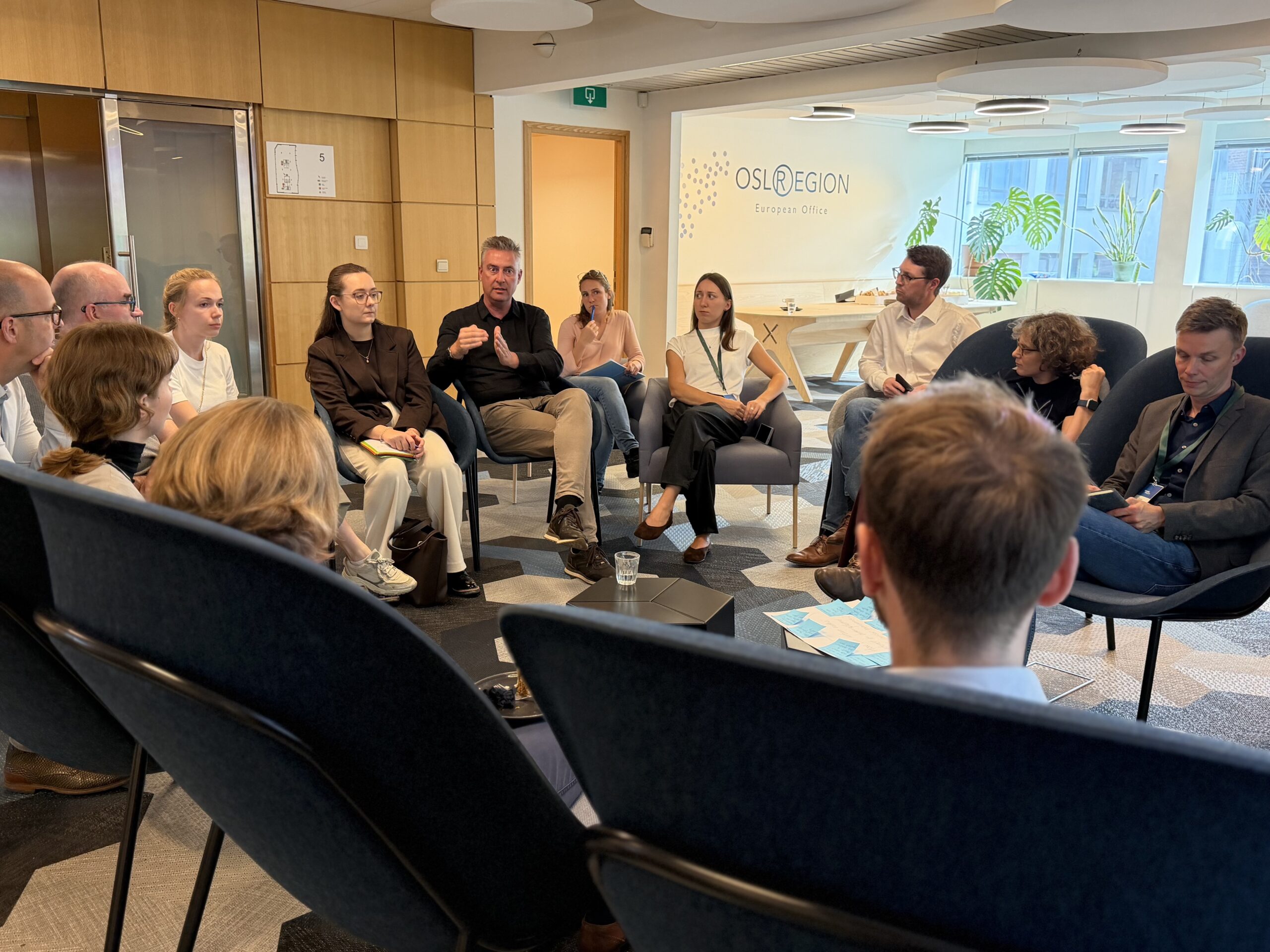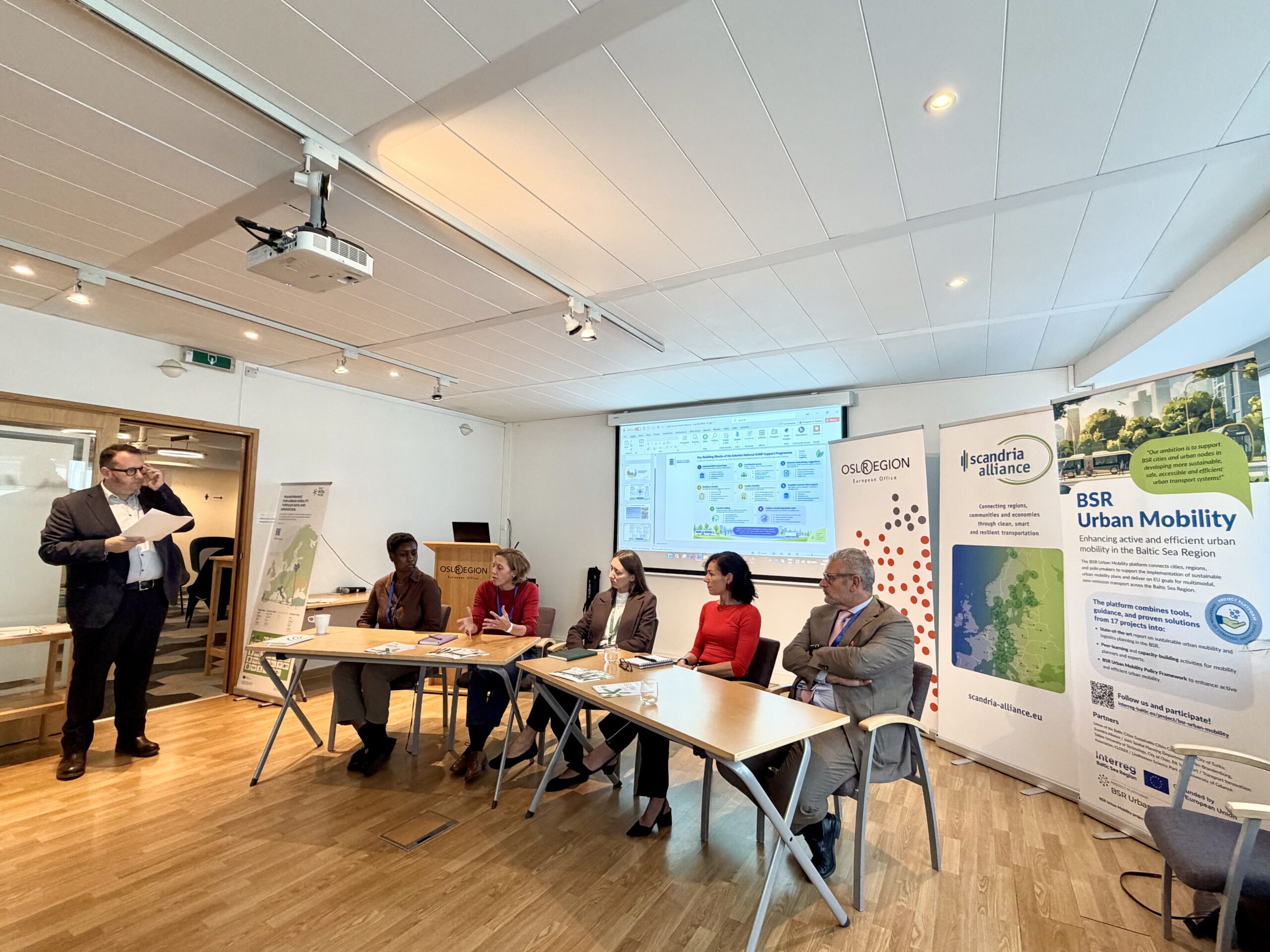
With the revised TEN-T Regulation, cities have taken on new responsibilities for sustainable urban mobility, from mobility planning to multimodal connections and data. How do they manage, and what support do they still need from regions, Member States and the EU? The BSR Urban Mobility project platform brought these questions to Brussels. To explore these questions in a dedicated workshop, BSR Urban Mobility and the Scandria Alliance teamed up with POLIS and Oslo Region Europen Office and invited cities, national authorities and EU representatives to the Nordic House in Brussels on 1 October 2026.
The workshop looked at urban nodes, sustainable urban mobility planning and the revised TEN-T regulation. Speakers discussed how cities are adapting to their new responsibilities and support they still need. Neri di Volo (European Investment Bank) and Merlin Rehema (National SUMP Contact Point, Estonian Ministry of Climate) gave presentations. They were followed by a panel with Annabel Keerd (EUSBSR Policy Area Transport), Chelsea Tschoerner-Budde (State of Hessen) and Cecilia Aketch Akanga (City of Umeå). After the panel discussion, participants moved into a World Café format to exchange their experiences in small groups.
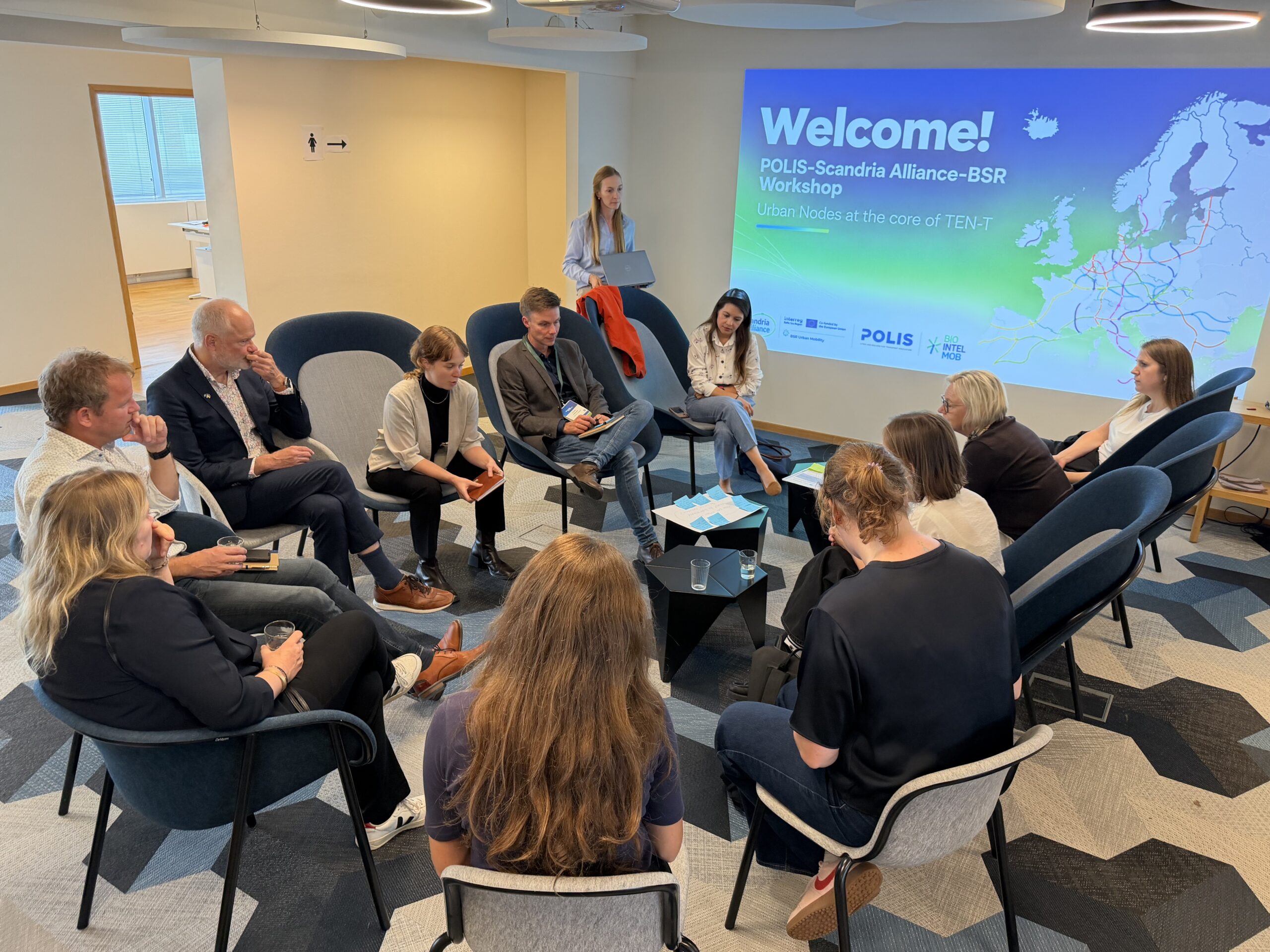
A key message from the discussion on TEN-T corridors was that urban nodes sit at the heart of these corridors but are still not sufficiently involved in corridor governance. Many cities do not take part in corridor fora and others find the discussions too far removed from local planning. Participants called for a clearer definition of roles, enhanced communication between corridor fora and cities, and greater consistency between the TEN-T objectives, Sustainable Urban Mobility Plans, and investment priorities.